
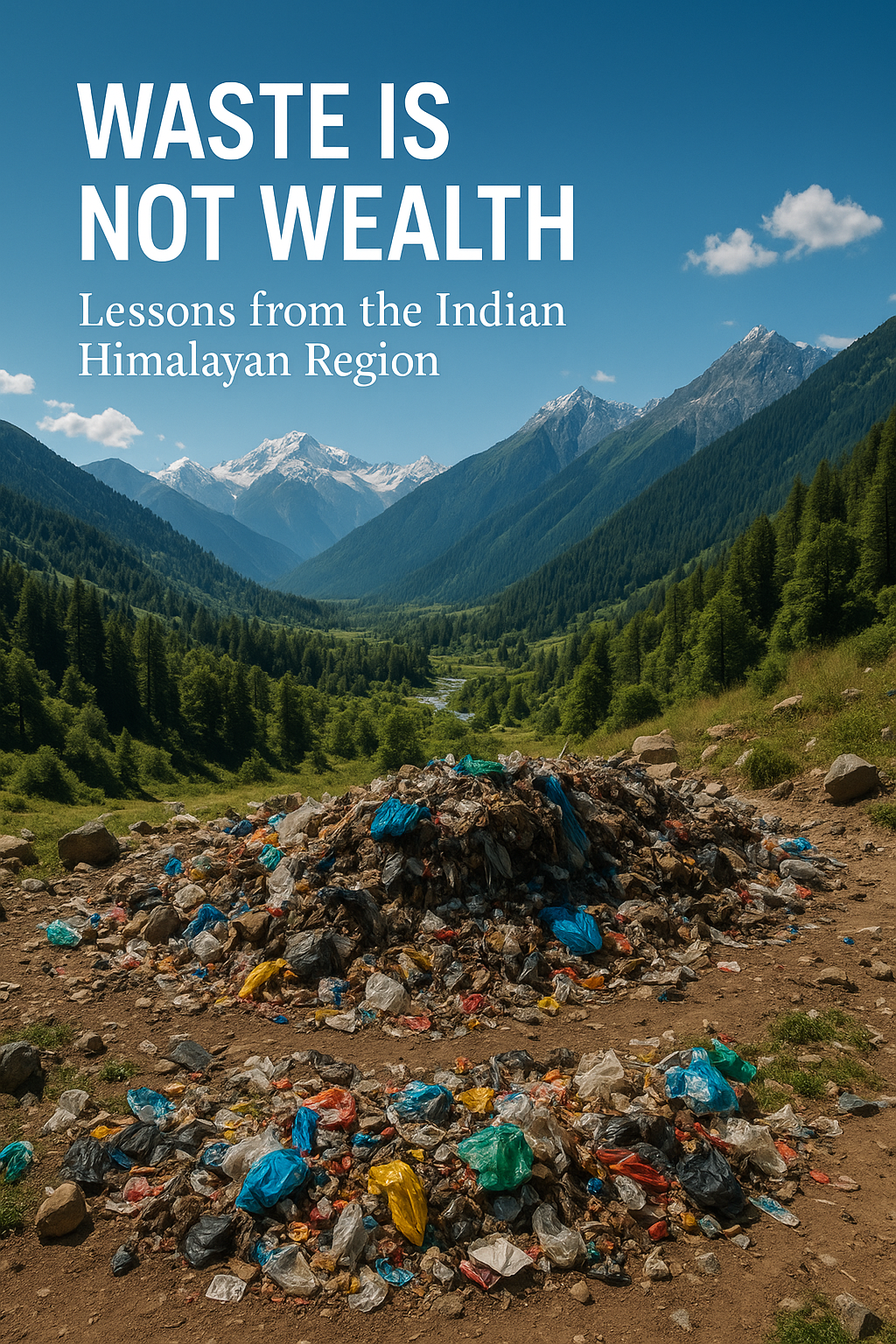
When we think of the Indian Himalayan Region (IHR), we imagine snow-capped peaks, lush valleys, and pristine rivers.
But behind this beauty lies a growing concern—waste management.
Unlike urban centers that have at least some organized systems, the fragile ecosystems of the Himalayas are under increasing pressure from poor waste disposal practices.
The region teaches us a hard truth: waste is not wealth unless it is managed wisely.
A Growing Crisis in Rural India
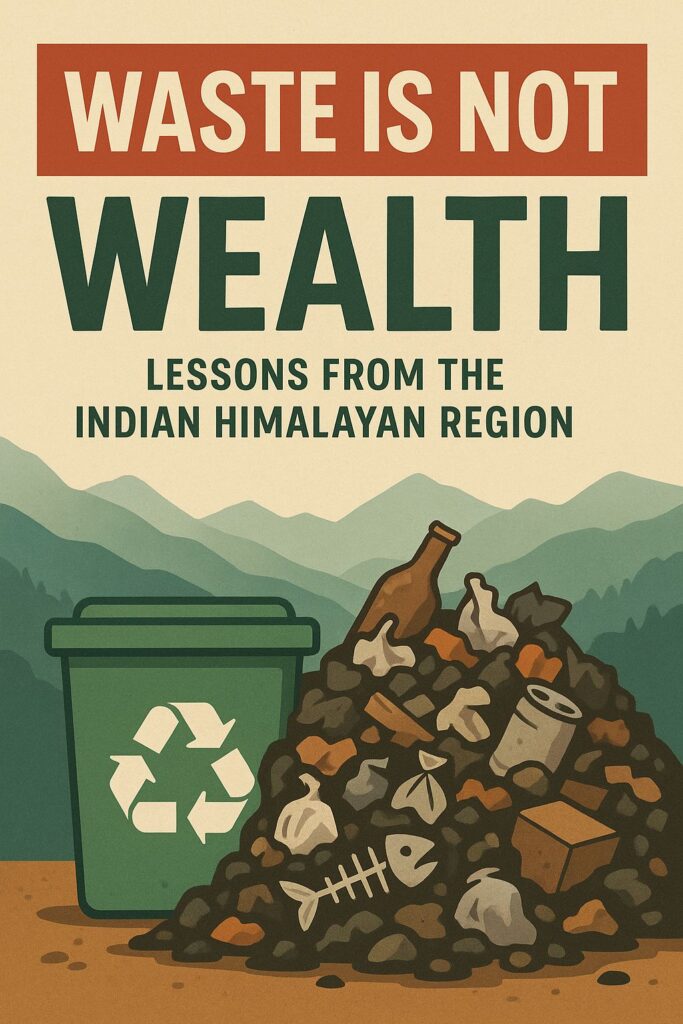
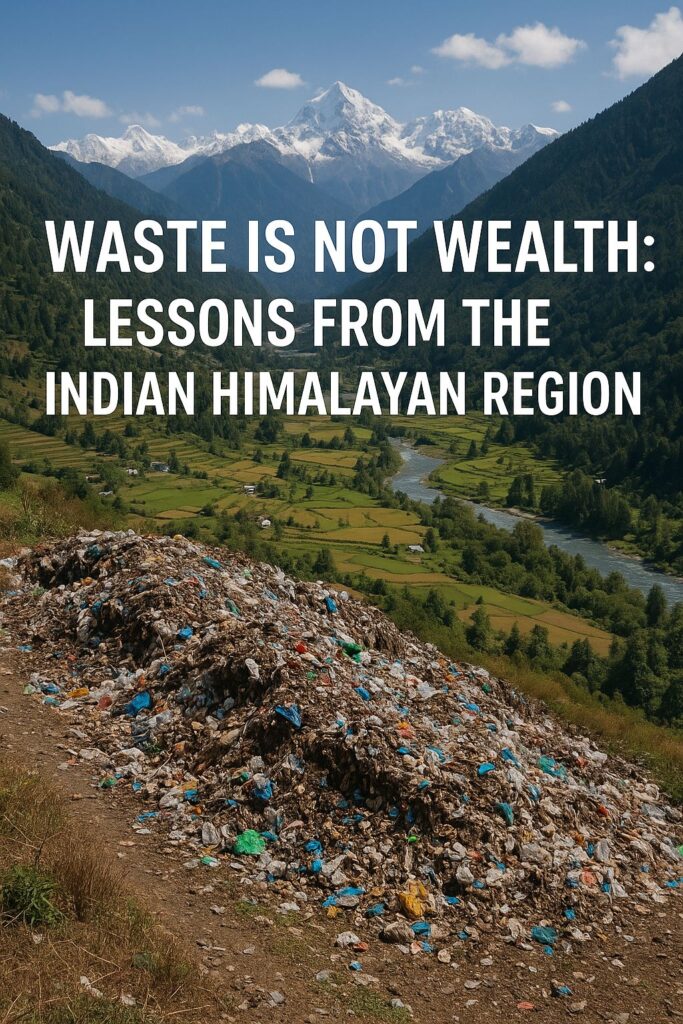
In the rural belts of the Indian Himalayas, waste management is often overlooked in public policy. Plastic bottles left behind by tourists, non-biodegradable packaging creeping into remote villages, and untreated organic waste piling up in towns are not just eyesores—they threaten biodiversity and human health. Rural India, especially in eco-sensitive zones, suffers from a lack of structured government schemes to address these pressing issues.
The absence of proper infrastructure leads to practices like open dumping and burning, which in turn affect soil fertility, contaminate water sources, and pollute the clean mountain air. The Himalayan ecosystem, already vulnerable to climate change, cannot afford the added burden of mismanaged waste.
Where Government Schemes and Public Policy Fall Short
India has launched multiple government schemes related to sanitation and waste management, such as Swachh Bharat Mission and various state-level initiatives. However, when it comes to the Himalayan states, implementation often struggles due to terrain, lack of funding, and limited local awareness. Public policy needs to go beyond slogans and address the logistical challenges of remote rural areas.
For example, plastic bans are declared in several states of the Himalayan belt. But without alternatives for rural households and small businesses, these bans are difficult to sustain. What results is a gap between policy on paper and reality on the ground.
Learning from Local Wisdom
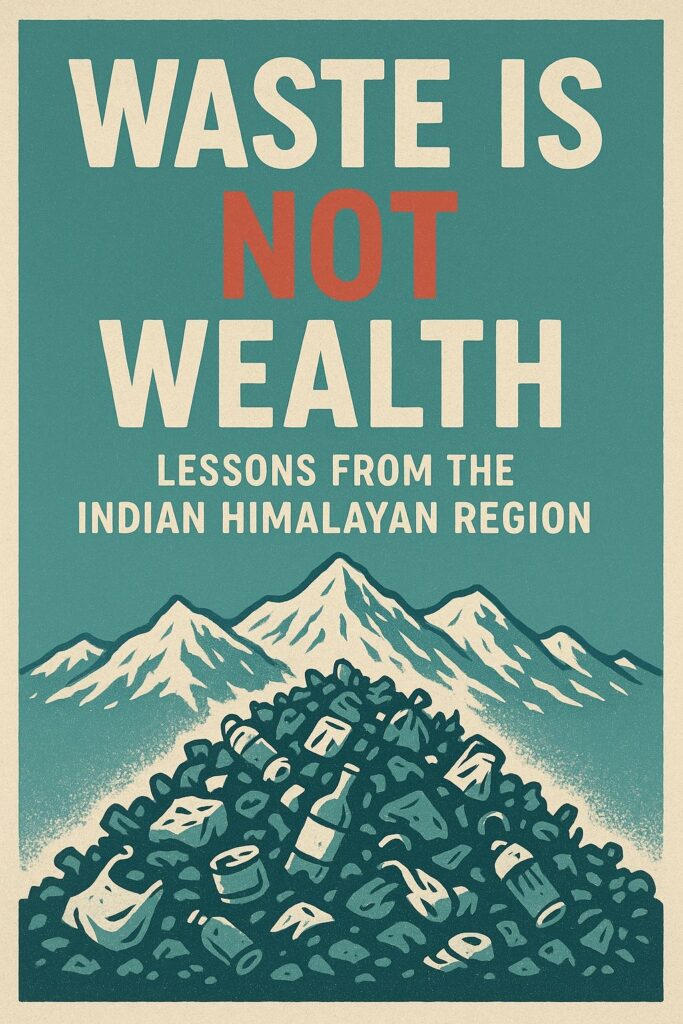
Interestingly, the communities of the Himalayas have long practiced sustainable living. Traditionally, waste was minimal—organic matter returned to the soil, and resources were reused until they served no purpose. But with modern packaging and lifestyle changes, these old practices have weakened. Reviving community-led waste management methods, while integrating modern technology, can help create solutions that are both eco-friendly and practical.
Sustainable Waste Management for the Future
To transform waste into wealth in the true sense,
the following steps can be taken:
1. Strengthening Public Policy – Policies must focus on rural-specific challenges, especially in eco-sensitive zones like the IHR.
2. Community Participation – Involving local villagers, women’s self-help groups, and youth clubs can ensure accountability and awareness.
3. Infrastructure Development – Setting up decentralized composting pits, small recycling units, and eco-friendly disposal systems in rural towns.
4. Tourist Responsibility – Tourists need to be educated and regulated to reduce the waste footprint in fragile Himalayan zones.
5. Innovation through Government Schemes – Linking waste management to livelihood opportunities can create a win-win model for rural India.
Conclusion
The Indian Himalayan Region is more than just a tourist destination—it is home to millions who depend on its land, water, and forests. Treating waste as a burden rather than wealth in this context provides us with valuable lessons. Without serious interventions in waste management, public policy, and government schemes, the ecological balance of the Himalayas could collapse.
For rural India, especially in sensitive zones, sustainable waste practices are not optional—they are essential. If we truly want to protect the Himalayas, we must rethink our approach to waste: not as wealth automatically, but as a responsibility that demands careful management.


Leave a Reply